 |
|||||
 |
|
 |
 |
||
| . | |||||
Minority Players and the American Football League |
|||||||||
. |
|||||||||
|
|||||||||
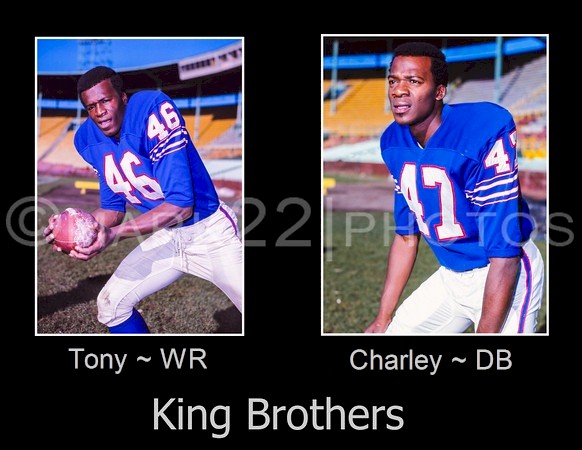
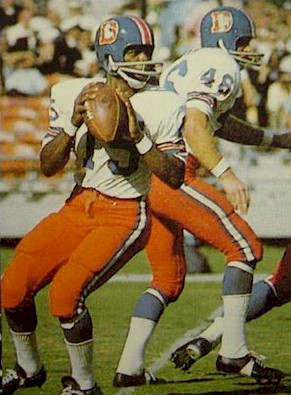
|
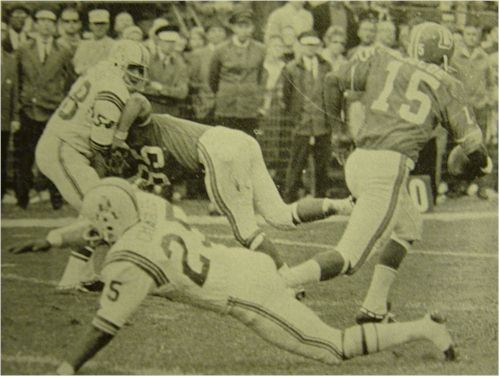
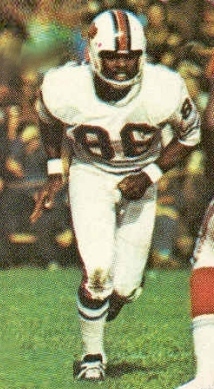
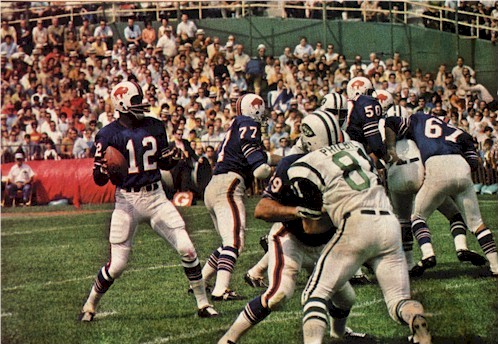
In spite of his passing skills and scrambling ability that earned him the nickname "Marlin the Magician", Briscoe was let go, and went to the Buffalo Bills for the 1969 season. But he didn't play quarterback there. Ironically, the Bills installed Grambling's James Harris as the first black quarterback to start a season at that position for a major league professional football team. Briscoe went on to become an outstanding receiver for the Bills and Dolphins, but both Briscoe and Harris were AFL pioneers whose accomplishments would pave the way for other great black quarterbacks to play professional football. (See Lloyd Vance's http://www.bqb-site.com/Timeline.htm for more information on black quarterbacks in Proessional Football.) |
|
|
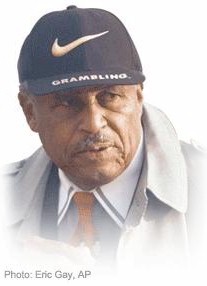
Eddie Robinson, Grambling State University's legendary coach, who played
an integral part in the American Football League's recruiting and signing of
black players, passed away on April 3, 2007. Published reports state
that "Robinson sent over 200 players to the NFL." Like most
such usages, apparently what was meant was that he sent over 200 players to
Professional Football. The articles are not clear as to
whether all those players were graduates of Grambling, but they are
impressive numbers, nonetheless. |
|
Among the AFL's Grambling signees were three eventual pro football hall of famers: Willie Brown, Charlie Joiner, and Buck Buchanan. Buchanan was the first black player ever selected in the first round of a Professional Football draft. Among the other AFL signees from Grambling were AFL All-Star Nemiah Wilson and the great Ernie Ladd, as well as James Harris, the first black in the modern era to begin a season as a starting pro quarterback. |
|
|
I had the pleasure of meeting Eddie several times and was always impressed the way he would talk to you and the way he handled himself. I played with and against many of his athletes. Every former Grambling player I was ever around were top notch citizens and had good manners off the field and when they stepped on the field they put it into another gear and played the game the way it was intended to be played. I always wished I could have played for him. I am sure he is sitting upstairs with our maker. What a wonderful human being he was. ~ Fred Arbanas |
|
| Patriots | Bills | Oilers | Jets | Dolphins | Broncos | Chiefs | Chargers | Raiders | Bengals |
. |
 |
 |
 |
 |
 |
 |
 |
|
|
Home . |
Site
Index . |
AFL Guest Book |
AFL All-Stars: |
A F L Hall of Fame |
AFL-NFL Merger |
Players who Belong in the Hall of Fame |
|
| 1964: | |||||||
| WEST | EAST | ||||||